

A Tribal Commission to Collaboratively Manage the Bears Ears National Monument
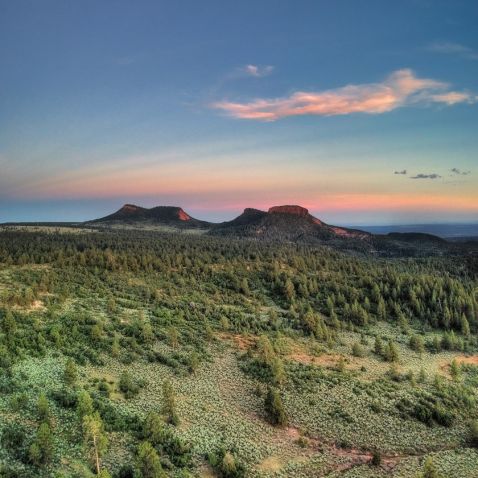
Many Indigenous peoples hold deep traditional, cultural, and community connections to the lands and waters that make up the Bears Ears National Monument. We see the health of ourselves, our communities, and the natural world as interconnected.
When Bears Ears was designated as a National Monument in 2016, President Obama affirmed the importance of Tribal participation in the care and management of the Monument and established the Bears Ears Commission (BEC) to inform the management of its lands and resources.
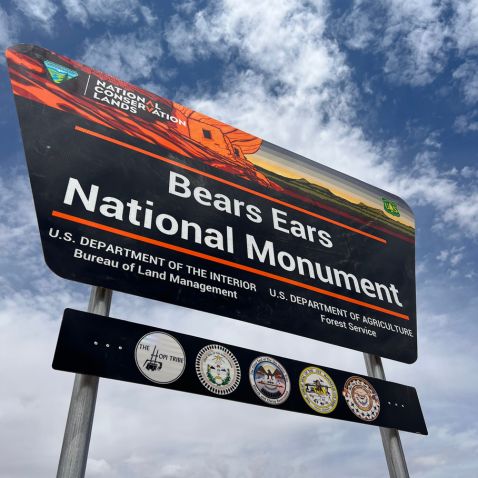
Why Was the Bears Ears Commission Formed?
The Bears Ears region holds profound cultural, spiritual, and historical significance to these five Tribes. In 2016, after a unified advocacy effort, President Barack Obama designated Bears Ears as a national monument, acknowledging its cultural significance and the need for protection. The Bears Ears Commission was established to guide monument stewardship in partnership with the federal government. This structure represents a new model of public land management that honors Tribal sovereignty and incorporates Traditional Indigenous Knowledge (TIK) to protect the Monument’s cultural belongings.
How the Commission and the Inter-Tribal Coalition are Connected
The BEC consists of elected Tribal leaders from the five Tribal Nations that founded the Bears Ears Inter-Tribal Coalition (BEITC) in 2015—the Hopi Tribe, Navajo Nation, Ute Mountain Ute Tribe, Zuni Tribe, and the Ute Indian Tribe of the Uintah & Ouray Reservation.
Originally, the BEITC assisted the Tribes in advocacy efforts to restore and designate Bears Ears as a National Monument. Today, the Coalition continues to support the Commission by providing it with operational capacity, technical expertise, land planning capacity, communications expertise, and funding.
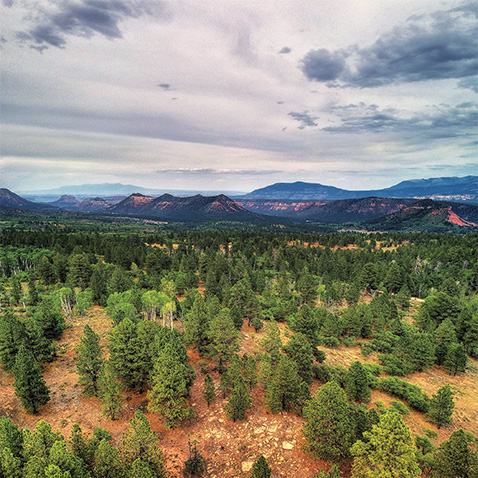
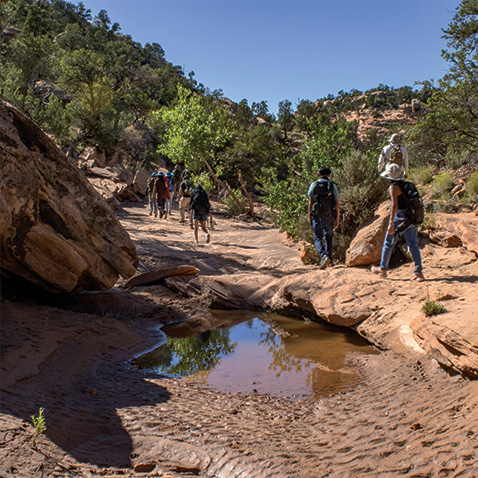
The Mission of the Bears Ears Commission
The Bears Ears Commission’s mission is to honor, protect, and conserve the Bears Ears landscape through the lens of Traditional Indigenous Knowledge and Tribal governance. The Commission’s work includes:
- Collaborative Management: In partnership with the Bureau of Land Management (BLM) and the U.S. Forest Service (USFS), the Commission plays a central role in contributing to and informing the Resource Management Plan (RMP) for Bears Ears. This plan outlines guidelines and regulations to ensure responsible, sustainable use of the land while prioritizing conservation through the lens of TIK.
- Protecting Sacred Places: Bears Ears is a sacred landscape filled with cultural belongings, sacred places, petroglyphs, ancestral dwellings, and natural landmarks. The Commission is committed to safeguarding these irreplaceable resources from threats like vandalism, overuse, and certain forms of recreation that are incompatible with a sacred cultural landscape.
- Incorporating Traditional Indigenous Knowledge: The Commission brings TIK to the forefront of land management, integrating ancestral knowledge, land stewardship practices, and cultural values into conservation efforts.
- Advocacy for Indigenous Rights: As a model of Tribal collaborative management, the Commission advocates for Tribal sovereignty and the right of Tribes to lead in the stewardship of their respective sacred landscapes. The Commission hopes that its work can serve as a model for greater Indian Country, and beyond.
Key Accomplishments of the Bears Ears Commission
- Contributing to a Preferred Management Plan: The Commission provided a standalone NEPA alternative, “Alternative E,” for the draft Resource Management Plan for Bears Ears, the first of its kind in U.S. history. Alternative E was selected as the preferred alternative in the Draft RMP and was incorporated into the proposed final RMP. This plan prioritizes conservation, incorporates Indigenous knowledge, and seeks to ensure that land management reflects the values and priorities of the Tribes.
- Strengthening Federal-Tribal Partnerships: Through its collaboration with the BLM and USFS, the Commission has established Bears Ears as a precedent-setting model for collaborative management, with Tribal leaders taking a central role alongside federal agencies. The Commission engaged with federal agencies in planning meetings, site visits, plan review, public comment meetings, public comment review, and provided cultural sensitivity and other technical trainings.
- Advocacy on a National Stage: The Commission has mobilized support across Tribal Nations and conservation organizations, advocating for policies that uphold the protection and significance of Bears Ears in the face of changing administrations and land management policies.
Looking Forward
The Bears Ears Commission envisions a future where Bears Ears remains a sanctuary of healing, culture, and history, protected for future generations. By advancing collaborative management and promoting Indigenous-led stewardship, the Commission is setting a new standard for public land management and Indigenous sovereignty in the United States.
Support the five Tribes
Bears Ears is a living cultural landscape that remains deeply connected to the five Tribes. Join the Bears Ears Commission in protecting this sacred land by staying informed, supporting our mission, and advocating for policies that honor Indigenous voices and traditions.
A Timeline of Tribal Leadership and Collaborative Management at Bears Ears
July 2015
The Hopi Tribe, Navajo Nation, Ute Mountain Ute Tribe, Zuni Tribe, and Ute Indian Tribe founded the Bears Ears Inter-Tribal Coalition (BEITC). Grounded in Tribal sovereignty, the five Tribes submitted a proposal for the creation of a new national monument.
December 2016
President Obama’s Proclamation established Bears Ears National Monument and the Bears Ears Commission.
December 2017
President Trump reduced Bears Ears National Monument by 85%, reducing protections and increasing vulnerability to looting of ancestral belongings, vandalism to sacred places, irresponsible visitation, and extractive pressures.
October 2021
President Biden’s Proclamation restored Bears Ears National Monument and reaffirmed the role of the Bears Ears Commission as collaborative managers of this sacred landscape.
June 2022
The five Tribes of the Bears Ears Commission entered into an unprecedented cooperative agreement with the Bureau of Land Management (BLM) and U.S. Forest Service (USFS), formalizing collaborative management and ensuring that Traditional Indigenous Knowledge informs the management of Bears Ears National Monument.
March 2024
The Bears Ears Commission, BLM, and USFS released a draft resource management plan for public comment. Alternative E, the preferred alternative of the Commission and federal agencies, incorporates Traditional Indigenous Knowledge and balances public access with the protection of cultural and natural resources across the five Tribes’ ancestral lands.
October 2024
The proposed Bears Ears National Monument Management Plan officially entered a required consistency review period. During this phase, the Utah governor’s office reviewed the plan to ensure alignment with state and local policies. This marked a critical step toward finalizing the plan, reflecting collaborative efforts between federal agencies and the five Tribes to sustainably manage and protect this sacred landscape for future generations.
January 2025
The Bears Ears Commission, in collaboration with the Bureau of Land Management and U.S. Forest Service, finalized the Bears Ears National Monument Resource Management Plan, marking a historic milestone in Tribal–federal collaboration. The plan reflects years of Tribal leadership and establishes a framework for managing the monument that incorporates Traditional Indigenous Knowledge, protects cultural and natural resources, and ensures long-term stewardship of this sacred landscape.