
Two-thirds of Utah voters support restoring greater protections to all of Bears Ears and Grand Staircase-Escalante, while 82% say Tribal Nations should have a strong role in managing public lands with sacred or culturally significant places.
A statewide poll released earlier this month shows strong support among Utah voters for protecting Bears Ears and for Tribal Nations having a meaningful role in decisions about lands that hold deep cultural significance.
For the five Tribal Nations that came together to protect Bears Ears, one finding stands out: 82% of Utah voters say it is important for Native American Tribes to have a strong role in managing public lands containing sacred or culturally significant sites. That includes 76% of Republicans, 86% of independents, and 97% of Democrats.
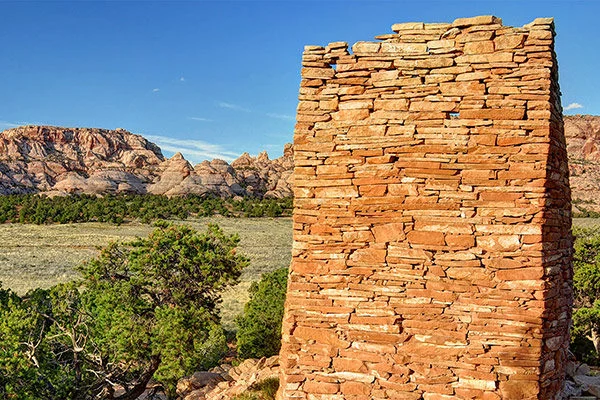
The Coalition Tribes have long maintained that Tribal Nations are not just stakeholders in Bears Ears. They are sovereign governments, and Bears Ears is a living cultural landscape tied to our histories, cultures, and ongoing responsibilities. Tribal people continue to return to Bears Ears to pray, gather medicines and foods, visit important places, and teach younger generations.
The poll also found that 66% of Utah voters believe greater protections should be restored to all of Bears Ears and Grand Staircase-Escalante National Monuments. That includes 52% of Republicans, 77% of independents, and 95% of Democrats.
Other findings include:
- 69% said the federal government getting rid of the Bears Ears Commission was a bad thing.
- 49% selected protecting Native American sacred and culturally important places as one of the two most important considerations for the monuments, second only to conservation at 53%.
What Has Happened Since July
The poll comes after two months of rapid changes at Bears Ears.
On July 13, the presidential proclamation illegally reduced Bears Ears National Monument to approximately 121,096 acres and terminated the Bears Ears Commission. The proclamation also attempts to open the door to mining and mineral development on lands removed from the Monument.
The following day, seven mining claims were submitted on lands removed from Bears Ears, even though the proclamation did not open those lands to new mining claims until September 11. The New York Times reported that federal officials were expected to reject claims filed before that date.
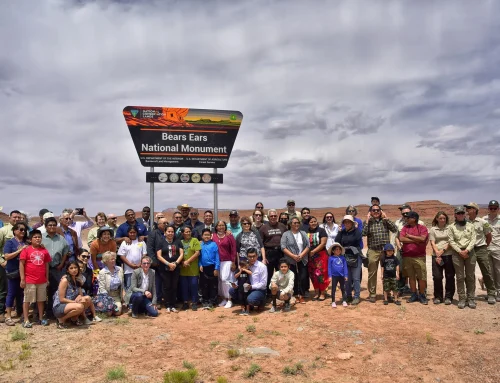
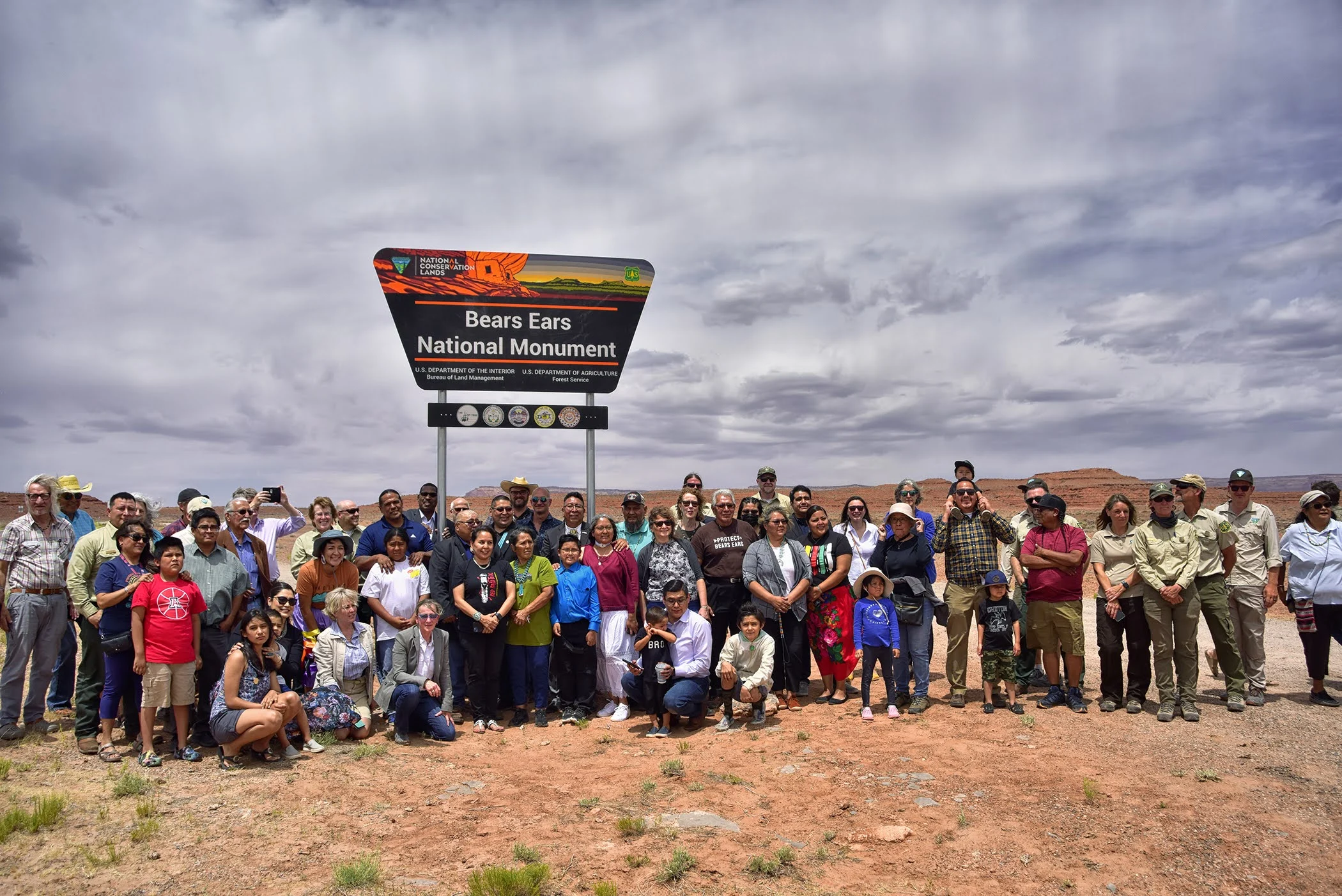
Within days of the July 13 proclamation, federal agencies began removing the seals of the five Coalition Tribes from Bears Ears National Monument signs. Monument signs in areas outside the new boundary were also taken down that week. Coalition Co-Chair Davina Smith-Idjesa said the signs had represented years of relationship-building, trust, and work between Tribal Nations and federal agencies.
In August, Democratic members of the House Natural Resources Committee opened an investigation into the timing of stock purchases by Energy Fuels executives in the days before the Bears Ears reduction. Energy Fuels has denied wrongdoing, and the investigation itself is not a finding that misconduct occurred.
On September 11, lands excluded from Bears Ears opened to mineral entry and mineral and geothermal leasing. Sixteen mining claims were recorded by noon that day. Since then, seven additional claims have been filed, bringing the total to 23 mining claims on lands removed from Bears Ears.
For the five Tribes, these events are not simply changes to a federal designation. They affect how Bears Ears is protected and the role Tribal Nations have in caring for their ancestral homelands.
The Tribes’ relationship with Bears Ears is not defined by a federal boundary. Their responsibility to care for this landscape continues, and the new polling shows that a strong majority of Utah voters support a continued Tribal role in its future.
The August 2026 survey of 500 registered Utah voters was conducted by New Bridge Strategy. The margin of error is ±4.38% for the overall sample. The margin of error will vary for subgroups. Poll materials are available from the Grand Canyon Trust.