
A look at how stewardship continues at Bears Ears through Tribal leadership, collaboration, and on-the-ground care.
If you’ve been following Bears Ears National Monument over the years, you’ve likely seen a lot of change.
For decades, Tribal Nations and partners have worked to protect this landscape. Over the past ten years in particular, there have been proposals from Coalition Tribes, along with the designation, reduction, and restoration of the Monument. There have also been court cases, public comment periods, and years of planning and collaboration between Tribal Nations and federal agencies.
So what’s happening at Bears Ears now? It’s a fair question.
The answer is simpler than it might seem.
The monument’s management plan is complete. Implementation is underway. And Tribal stewardship continues.
From Planning to Implementation
In early 2025, the Bears Ears Resource Management Plan (RMP) was finalized and signed into the Record of Decision.
That marked the end of a long planning process, and the start of putting that plan into practice.
The focus now is on how that plan is carried out on the ground. It’s less about drafting policy, and more about day-to-day care, coordination, and responsibility.
This includes meeting with a range of stakeholders, including producers, recreation groups, and other partners to help inform how the RMP is carried out. It also involves reviewing and providing recommendations on projects, along with supporting on-the-ground work like habitat and stream restoration, including recent efforts in the Indian Creek watershed led in collaboration with Tribal leaders, agencies, and NGO partners.
This phase doesn’t always get the same level of attention. But it’s where years of hard work takes shape.
Guided by Tribal Leadership
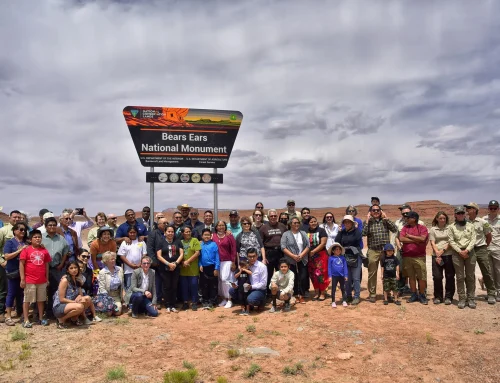
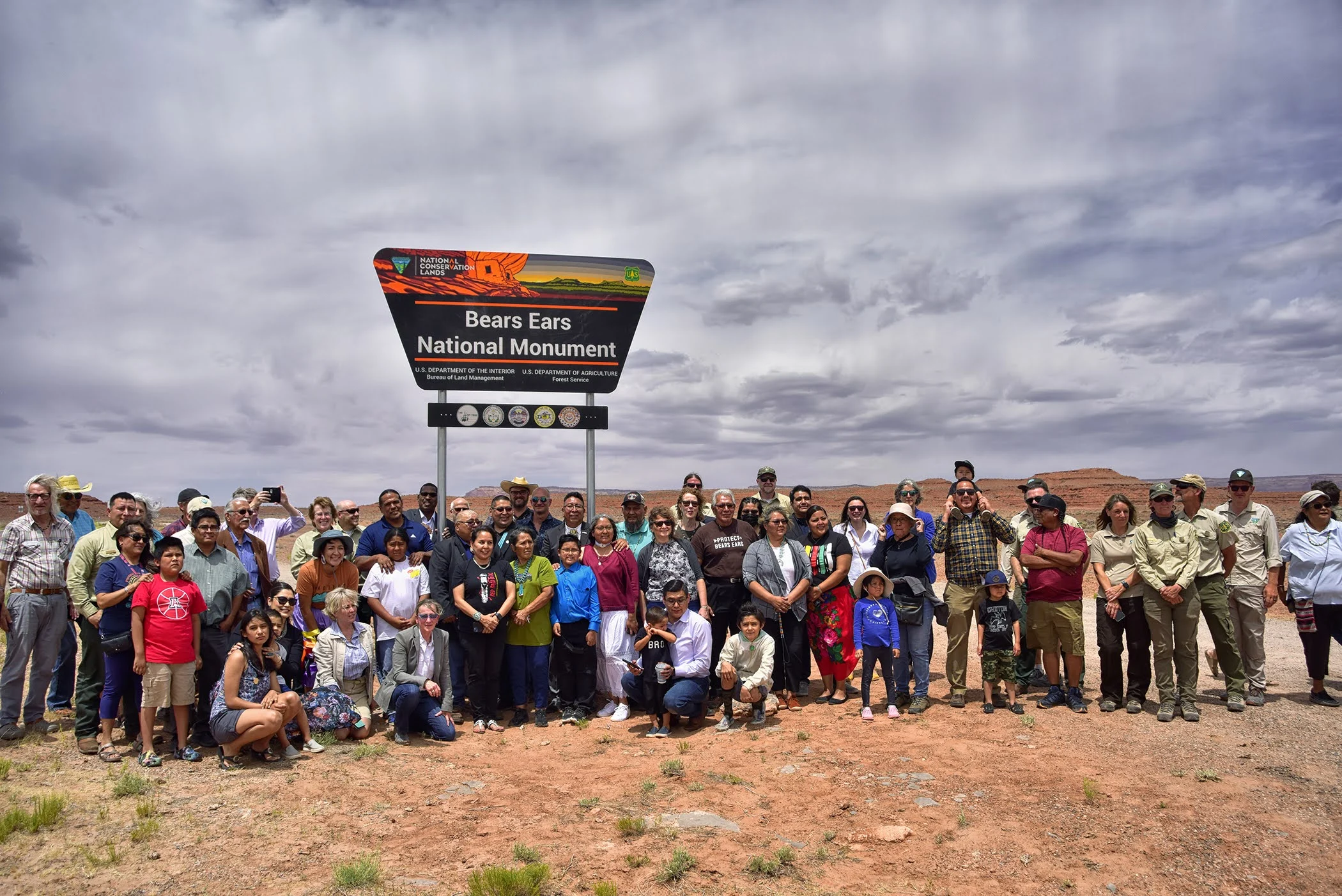
Bears Ears is guided by the leadership of five sovereign Tribal Nations:
- Hopi Tribe
- Navajo Nation
- Ute Mountain Ute Tribe
- Zuni Tribe
- Ute Indian Tribe of the Uintah and Ouray Reservation
These Nations care for the monument through the Bears Ears Commission, working in collaboration with federal agencies.
That leadership is grounded in living relationships to this place, reflecting generations of knowledge, responsibility, and connection that long predate the monument itself.
Today, these relationships continue to shape how decisions are made and how stewardship happens on the ground.
What Collaborative Management Looks Like
Bears Ears reflects a first-of-its-kind approach to collaborative management. Tribal Nations and federal agencies work together, weaving Traditional Indigenous Knowledge and Western science.
That collaboration takes many forms:
- Ongoing coordination between Tribal leaders and agency staff
- Input on land management decisions and priorities
- Protection of cultural and natural resources
- Supporting how visitors understand and engage with the landscape
This work is built on relationships. It takes time, trust, and consistency.
A Different Kind of Timeline
Much of the public conversation around Bears Ears has focused on political timelines, like election cycles, administrative changes, and shifting policies. But Tribal stewardship does not begin or end with those moments.
Tribal Nations have maintained relationships to this landscape for generations. That continuity carries forward regardless of changes in leadership or policy.
Long-standing ancestral connections to the Bears Ears cultural landscape are part of what makes this work durable.
Carried Across Generations
Stewardship at Bears Ears begins with connection to place. Policy and governance grow from that foundation. Youth and elders work together to carry forward knowledge, language, and responsibility for caring for this landscape.
Through programs like the Bears Ears Conservation Corps and the Bears Ears Youth Council, Tribal members spend time on the land, learning, teaching, and continuing traditions of stewardship.
This work carries across generations. It is not tied to election cycles or political timelines.
Here’s one perspective from a Bears Ears Youth Council participant:
Jerilynn Arnold, Ute Mountain Ute representative, Bears Ears Youth Council
“Maintaining public lands takes a whole lot of work… we can continue to teach the younger generations about land protection and traditional preservation.”
– Jerilynn Arnold, Bears Ears Youth Council
To summarize
The Resource Management Plan is complete. The focus now is on care, guided by Tribal leadership and carried out through collaboration with federal agencies.
That care includes coordination, decision-making, and stewardship on the ground. It’s steady work, rooted in long-standing responsibility to this place.
It may not always be visible from the outside, but it is ongoing.
Stay connected
In the coming weeks, we’ll share more about what this work looks like in practice, including the stewardship, leadership, and people carrying it forward.
If you’d like to follow along, sign up for our newsletter or follow us on Instagram, Facebook, LinkedIn, BlueSky