
Last week marked one of the most severe setbacks in the history of Bears Ears.
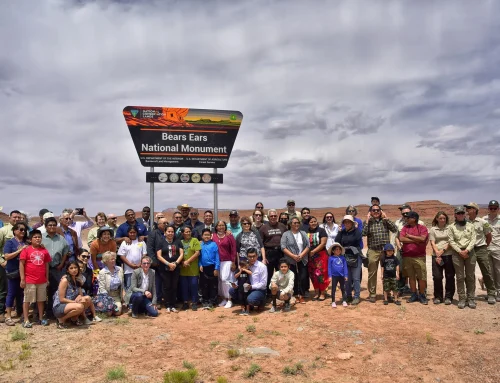
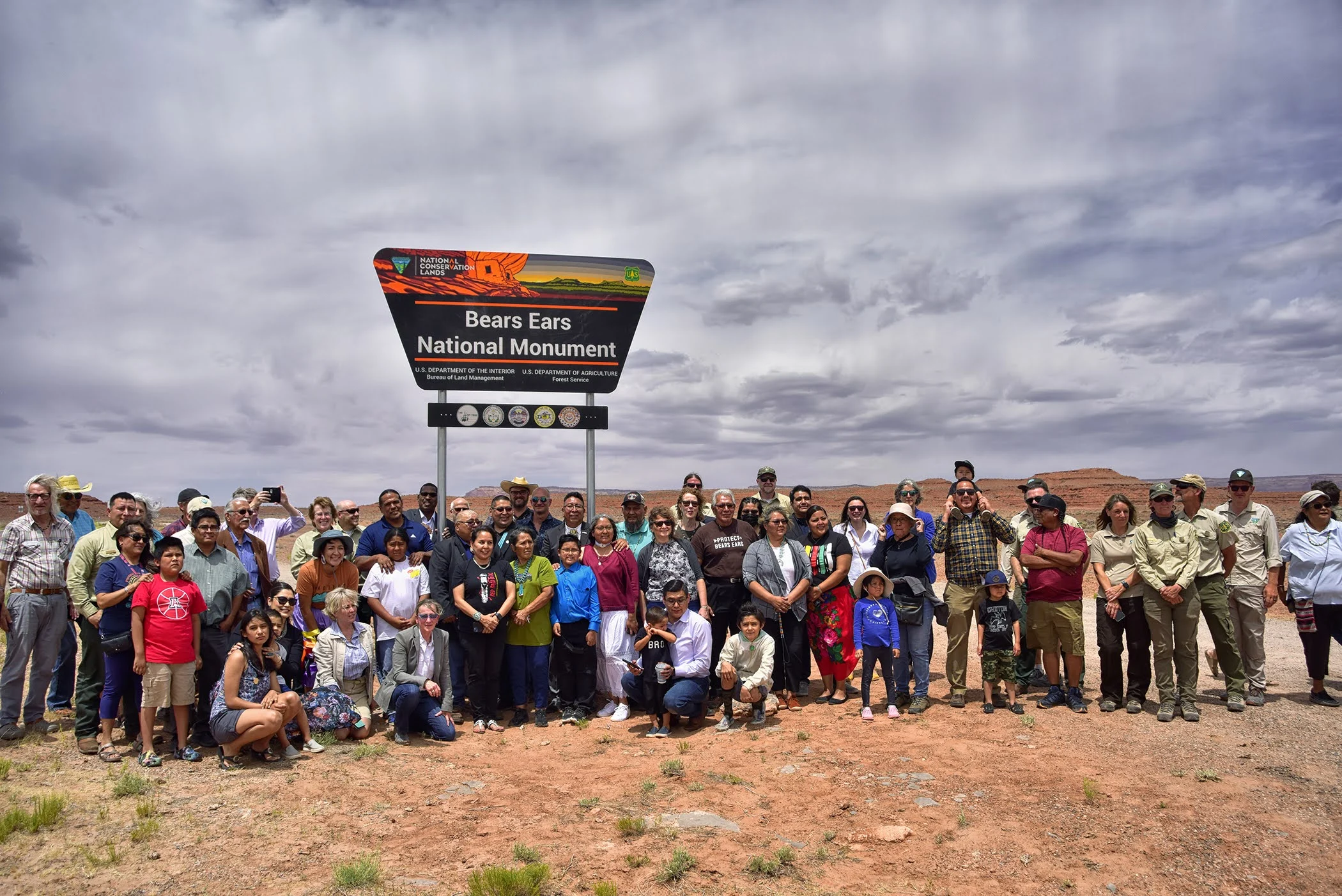
President Trump reduced Bears Ears National Monument by approximately 91 percent and terminated the Bears Ears Commission. The proclamation ended the nation’s first and most established framework for Tribal collaborative management of a national monument. In the days that followed, Monument signs throughout the area were taken down, and the seals of the five Commission Tribes were removed from many of the remaining signs.
For many people, those signs represented more than a decade of work by Tribal Nations to build a new model of collaborative management grounded in Tribal sovereignty, Traditional Indigenous Knowledge, and government-to-government relationships.
Those changes came during the same week the Bears Ears Inter-Tribal Coalition marked its eleventh anniversary. The Coalition turns eleven this year, but the movement to protect Bears Ears stretches back much further.
When the five Tribes formed the Bears Ears Inter-Tribal Coalition in July 2015, they united around a shared vision for Bears Ears that built on years of Tribal advocacy and generations of connection to the landscape.
A shared vision
The Bears Ears Inter-Tribal Coalition was established by the five Tribes in July 2015, but as the Coalition wrote later that year:
— Bears Ears Inter-Tribal Coalition, December 31, 2015
For countless generations, Tribal Nations have cared for Bears Ears, and long before the Coalition was formed, Tribal leaders and community members were organizing, advocating, and working to protect this sacred ancestral homeland.
In 2015, the Hopi Tribe, Navajo Nation, Zuni Tribe, Ute Mountain Ute Tribe, and Ute Indian Tribe of the Uintah & Ouray Reservation came together to form the Bears Ears Inter-Tribal Coalition.
Together, the Tribes brought a shared vision to the federal government: protect Bears Ears as an interconnected living cultural landscape and ensure Tribal Nations had a meaningful role in caring for their ancestral homelands.
One of the Coalition’s first actions was submitting a comprehensive Tribally-led proposal to President Obama. That proposal reflected years of advocacy and presented a shared Tribal vision for protecting Bears Ears as an interconnected living cultural landscape.
A new model
In December 2016, President Obama designated Bears Ears National Monument and established the Bears Ears Commission, recognizing the five Tribes as partners in helping guide the Monument’s management.
The following year, the Monument was reduced by approximately 87 percent.
Even as those protections were rolled back, the five Tribes did not abandon the vision they had spent years building. Instead, they continued developing the Tribal Land Management Plan, a blueprint describing how Bears Ears should be cared for using Traditional Indigenous Knowledge.
Building collaborative management
In October of 2021, President Biden restored Bears Ears National Monument and the Bears Ears Commission.
The following summer, the Coalition Tribes, the Bureau of Land Management, and the U.S. Forest Service signed the Inter-Governmental Cooperative Agreement, creating a formal framework for collaborative management. For the first time, Tribal leaders were helping shape how Bears Ears would be cared for alongside federal land managers.
Over the next several years, Tribal leaders and federal partners worked together to develop the Bears Ears Resource Management Plan (RMP).
The RMP was formally adopted through the Record of Decision in January 2025. It became the first plan of its kind to weave Traditional Indigenous Knowledge throughout the management of a national monument while implementing the collaborative management framework shaped by the five Tribes.
During this time, the Coalition also invested in youth leadership, landscape stewardship, cultural education, partnerships, and opportunities for Tribal members to reconnect with Bears Ears.
Where we stand today
Last week’s proclamation reduced Bears Ears National Monument once again and terminated the Bears Ears Commission.
The removal of the Tribal seals from Monument signs became a physical reminder of those changes.
The Tribes’ relationship with Bears Ears did not begin with the Monument, and it does not end with the termination of the Commission.
Coalition Co-Chair Davina Smith-Idjesa (Diné) shared this in an interview with High Country News: “You can abolish a commission, you can redraw a boundary, but you cannot erase our prayers from this land. You cannot erase the footprints of our ancestors from this land. You cannot erase us. We are still here.”
For the past eleven years, the Coalition has carried forward a vision that was already generations in the making. That vision has weathered setbacks before, and it continues today.
The anniversary marks more than eleven years of an organization. It marks eleven years of the five Tribes advancing a shared vision for Bears Ears that continues to guide this work.
The Bears Ears Inter-Tribal Coalition remains committed to protecting this sacred ancestral homeland, supporting Tribal leadership, and ensuring that future generations inherit the living cultural landscape that has sustained Tribal peoples since time immemorial.